

Schizophrenia Treatment & Mental Health Support
Professional, compassionate and personalised care for individuals experiencing schizophrenia and related mental-health challenges.
Understanding Schizophrenia
Schizophrenia is a complex mental-health condition that can affect thoughts, perceptions, emotions, behaviour and everyday functioning. Symptoms can vary from person to person and may change over time.
With appropriate assessment, treatment and ongoing support, many people can manage symptoms and work toward improved functioning and quality of life.

Comprehensive Schizophrenia Care
Personalised treatment can bring together several types of support.
Medication Management
Professional monitoring and personalised medication planning.
Psychological Therapy
Support to develop coping strategies and manage distressing experiences.
Family Support
Education and guidance for families and caregivers.
Psychosocial Rehabilitation
Support with social, communication and everyday-life skills.
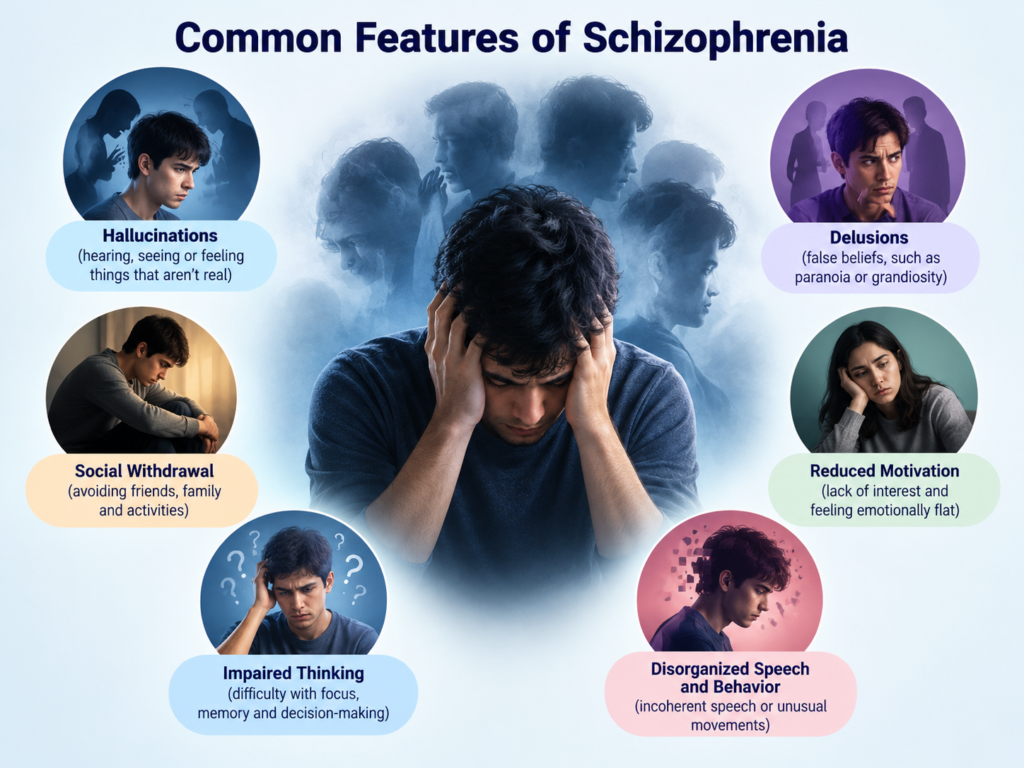
Common Features of Schizophrenia
Recognising concerning changes and seeking professional help early can support timely assessment and appropriate treatment.
- Hallucinations
- Delusions
- Disorganised thinking or speech
- Changes in behaviour
- Social withdrawal
- Reduced motivation
- Difficulty concentrating
Experiencing one of these does not automatically mean someone has schizophrenia. A qualified mental-health professional should carry out a proper assessment.
Explore Our Information
Choose the topic that matches your situation.
What Is Schizophrenia?
A clear introduction to the condition and common symptoms.
Early Warning Signs
Recognising early changes that may need assessment.
Diagnosis
What a professional assessment may involve.
Treatment Options
Medication, therapy, family support and rehabilitation.
Recovery
Building stability, relationships and personal goals.
Family Support
How families and caregivers can help.

Recovery Is a Personal Journey
Recovery does not necessarily mean that every symptom disappears. It can also mean developing greater stability, improving functioning and working toward personal goals.
A personalised treatment plan can be reviewed as goals and needs change.
Common Questions
Is schizophrenia treatable?
Yes. Schizophrenia can be treated and managed. Treatment aims to reduce symptoms, improve functioning and support recovery.
Does schizophrenia require medication?
Antipsychotic medication is commonly used, but treatment should be individually planned by a qualified psychiatrist.
Can symptoms return?
Symptoms can return for some people. Regular follow-up and recognising early warning signs can help with long-term management.
You Don’t Have to Face It Alone
If you or someone you care about is experiencing concerning changes in thoughts, behaviour or perception, professional assessment can help.